 Find us at: Phoenix Hospital, Great Baddow, Chelmsford |
  Call us on: 01245 203 838 |
  Email us at: [email protected] Find us at: Phoenix Hospital, Great Baddow, Chelmsford | Call us on: 01245 203 838 | Email us at: [email protected]

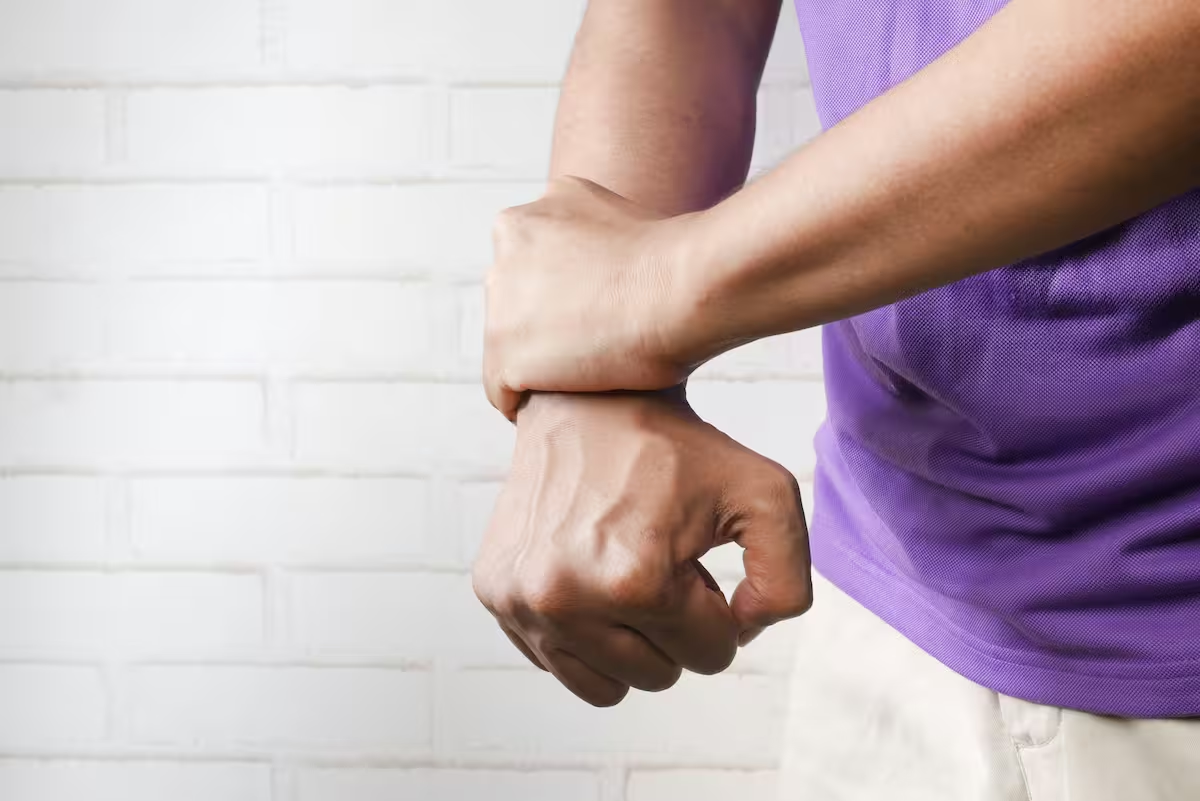
If your joints have started aching, you are probably already wondering how to relieve joint pain at home before doing anything else. That is a good instinct. Most joint pain settles with a few sensible steps, and self-help really is the right place to start. This guide, written by Fiona, our joint care specialist at Chelmsford Private GPs, walks you through what actually helps, what to avoid, and the clear signs that mean it is time to see someone.
Joint pain is very common. Around 10 million people in the UK live with osteoarthritis alone, and that is only one of the many reasons a joint can start to hurt. So if you are dealing with this, you are far from alone.
Joint pain is discomfort in one or more joints, anywhere from a mild ache that comes and goes to a more persistent pain that gets in the way of daily life. Most of the time it comes down to a handful of everyday causes.
The most common is osteoarthritis, where the cushioning cartilage inside a joint gradually wears down. It tends to begin after the age of 45 and most often affects the knees, hips, hands, and spine. Overuse and repetitive activity are another frequent cause, particularly in active adults who play sport or train regularly. This kind of pain is not always arthritis, and it is usually very manageable. Perimenopause and menopause matter here too. As oestrogen levels fall, many women notice new aches and stiffness in their joints, something the NHS recognises as a genuine cause of joint pain.
This guide is about that everyday joint pain. It does not cover pain after a serious injury, a fall, or a suspected fracture, which needs different care straight away.
Most mild to moderate joint pain can be managed at home. The steps that help most are gentle movement, heat or cold therapy, over-the-counter pain relief where you need it, and keeping your weight in a healthy range. If your pain has not improved after around two weeks of looking after it yourself, it is worth speaking to a GP.
This is the single most important thing you can do, even though it can feel like the opposite of what your body is asking for. Stopping movement altogether makes stiffness worse over time and weakens the muscles that support and protect the joint.
The evidence is strong. NICE now recommends therapeutic exercise as a core treatment for everyone with osteoarthritis, and points out that it has a better safety profile than most painkillers. A review of exercise trials found people worried that activity would make their joints worse, when in fact it reduced their pain. That myth holds a lot of people back.
Low-impact activity is ideal: walking, swimming, cycling, yoga, Pilates, or tai chi. A little muscle soreness after gentle exercise is normal and settles on its own. Pain that clearly worsens as you go is different. If that happens, stop, rest, and reassess rather than pushing through.
Heat and cold both help, but they do different jobs.
Cold is best for acute pain, swelling, or soreness straight after activity. Wrap an ice pack or a bag of frozen peas in a towel and hold it on the area for up to 20 minutes every two to three hours. Never put ice directly on your skin.
Heat suits stiffness and a longer-standing, dull ache. A warm compress, a hot water bottle, or a warm bath can all ease a stiff joint. Soaking in a warm bath before you exercise is a good way to loosen things up first.
If you need something for the pain, it helps to know what current guidance recommends, because it has changed.
For joint pain linked to osteoarthritis, NICE now places topical NSAIDs first. A topical gel such as diclofenac (sold as Voltarol) is rubbed into the skin over the sore joint. It works well for joints close to the surface like the knees, hands, and wrists, and because very little is absorbed into the rest of the body, it tends to be gentler than tablets.
Oral anti-inflammatories such as ibuprofen and naproxen can be a step up where topical treatment is not enough, used at the lowest dose that helps for the shortest time. They are not right for everyone. Take extra care, and check with a pharmacist first, if you have a history of stomach ulcers, heart disease, angina, a previous heart attack or stroke, kidney disease, or asthma, if you are pregnant, or if you take blood-thinning medication. A pharmacist can point you to the safest option for you.
Paracetamol is still widely used and can help with milder aches, so it remains a reasonable thing to have to hand. One thing to know, though, is that NICE no longer routinely recommends it for osteoarthritis, because the evidence that it works well for this kind of pain is weak. If it is not touching your pain, that is why, and it is worth talking to a pharmacist or GP about what else might help.
If you carry extra weight, losing even a little takes a real strain off your knees and hips. The effect is bigger than most people expect. Research shows that each pound of weight lost reduces the load on the knee by around four pounds with every step you take during everyday activities. Small, steady changes add up.
This is not about how you look. It is a practical, clinical way to ease the pressure on a sore joint. If weight is part of the picture for you, this is an area we work with you on directly, through lifestyle medicine support and GP-led weight loss consultations with Dr Fiona Graham and Dr Alev Onen.
Rest has its place, particularly after activity or during a flare-up. Complete rest, on the other hand, tends to make most joint pain worse rather than better. The NHS is clear on this: do not completely stop moving the affected joint.
The better approach is pacing. Take short breaks of a few minutes every half hour or so, and switch between more and less demanding tasks rather than stopping altogether.
A little extra support can help while you keep moving. A compression sleeve or brace can steady a sore knee or wrist. Supportive footwear makes a difference for foot, ankle, and knee pain. A walking aid can give you confidence on uneven ground if a hip or knee is troubling you. Think of these as a helping hand alongside movement, not a replacement for it.
A simple rule of thumb helps here. If home treatment has not improved your pain after around two weeks, or if the pain keeps coming back, it is worth seeing a GP. This is the same two-week guide the NHS uses, and it is a sensible line to draw.
There are a few other reasons to book in sooner, none of them an emergency, but none worth putting up with for long:
Seeing someone early often means a simpler, clearer answer.
Most joint pain is not an emergency. A small number of signs, though, should never be ignored.
Seek urgent help the same day, or call NHS 111, if:
Go to A&E or call 999 if:
These are rare, and they are quite different from the everyday ache that brought most people to this page. But if you notice any of them, act on them.
Looking after your joints at home is the right first step, and for most people it is enough. When it is not, when the pain is persistent, slowly getting worse, or wearing you down, you do not have to wait it out. A private GP appointment gives you fast access to a proper assessment and a clear plan, without a long wait. That matters at a time when trauma and orthopaedics is the largest waiting list in the NHS, with hundreds of thousands of people waiting for treatment.
A consultation with us includes a full history and a physical examination, so we take the time to understand the whole picture. Where it helps, we can arrange blood tests and imaging referrals such as X-ray, ultrasound, or MRI to get to the bottom of what is going on. We can prescribe, and refer you to trusted specialists where needed. You can see us face to face, by video, or over the phone, including evenings and Saturdays.
For persistent pain in one particular joint, such as a knee, hip, shoulder, or wrist, Dr Fiona Graham offers steroid joint injections at the clinic. These can bring real relief from inflammation when self-help alone has not been enough.
And if your joint pain is tied up with weight or lifestyle, Dr Fiona Graham and Dr Alev Onen work with you through lifestyle medicine and weight loss consultations, looking at the everyday changes that make a real difference over time.
If your joints have been holding you back and you would like a proper answer, we would be glad to help. You can call us on 01245 203 838 or book online.
The most common cause is osteoarthritis, which develops as the cartilage between your joints wears down over time. It usually begins after the age of 45 and is most common in the knees, hips, hands, and spine. Overuse, past injuries, rheumatoid arthritis, and gout are other common causes.
Rest, gentle movement, and over-the-counter pain relief are good starting points when several joints ache together. That said, widespread joint pain, especially alongside morning stiffness, fatigue, or feeling generally unwell, is worth talking through with a GP. It can point to something like rheumatoid arthritis or a viral illness. It is not always a sign of anything serious, but if it lasts beyond a couple of weeks it deserves a proper look rather than being managed indefinitely on your own.
For osteoarthritis, current guidance now puts a topical anti-inflammatory gel such as diclofenac first, applied over the sore joint. An oral anti-inflammatory such as ibuprofen or naproxen can be a step up where that is not enough, used sparingly and with care if you have other health conditions. Paracetamol can help milder aches, though it is no longer routinely recommended for osteoarthritis. Always follow the label, and check with a pharmacist if you take other medicines.
Common triggers include overdoing an activity, changes in the weather, and staying in one position for a long stretch, whether sitting or standing. Carrying extra weight plays a part too, and stress and poor sleep can make pain feel worse. Managing how much you do, and keeping gently active on most days, helps to reduce how often flare-ups happen.
Yes. As oestrogen levels fall during perimenopause and menopause, many women develop aching, stiffness, and joint pain, often in the hands, knees, and hips. It is common: a review found that around 7 in 10 perimenopausal women experience musculoskeletal pain. This is sometimes called oestrogen withdrawal arthralgia. If your joint pain started or got worse around the time of perimenopause, it is worth mentioning to your GP, and something our women's health service can help with.

You can contact us on any of the following:
Phoenix Hospital, Great Baddow, Chelmsford
Tel:
01245 203 838
Email:
[email protected]