 Find us at: Phoenix Hospital, Great Baddow, Chelmsford |
  Call us on: 01245 203 838 |
  Email us at: [email protected] Find us at: Phoenix Hospital, Great Baddow, Chelmsford | Call us on: 01245 203 838 | Email us at: [email protected]

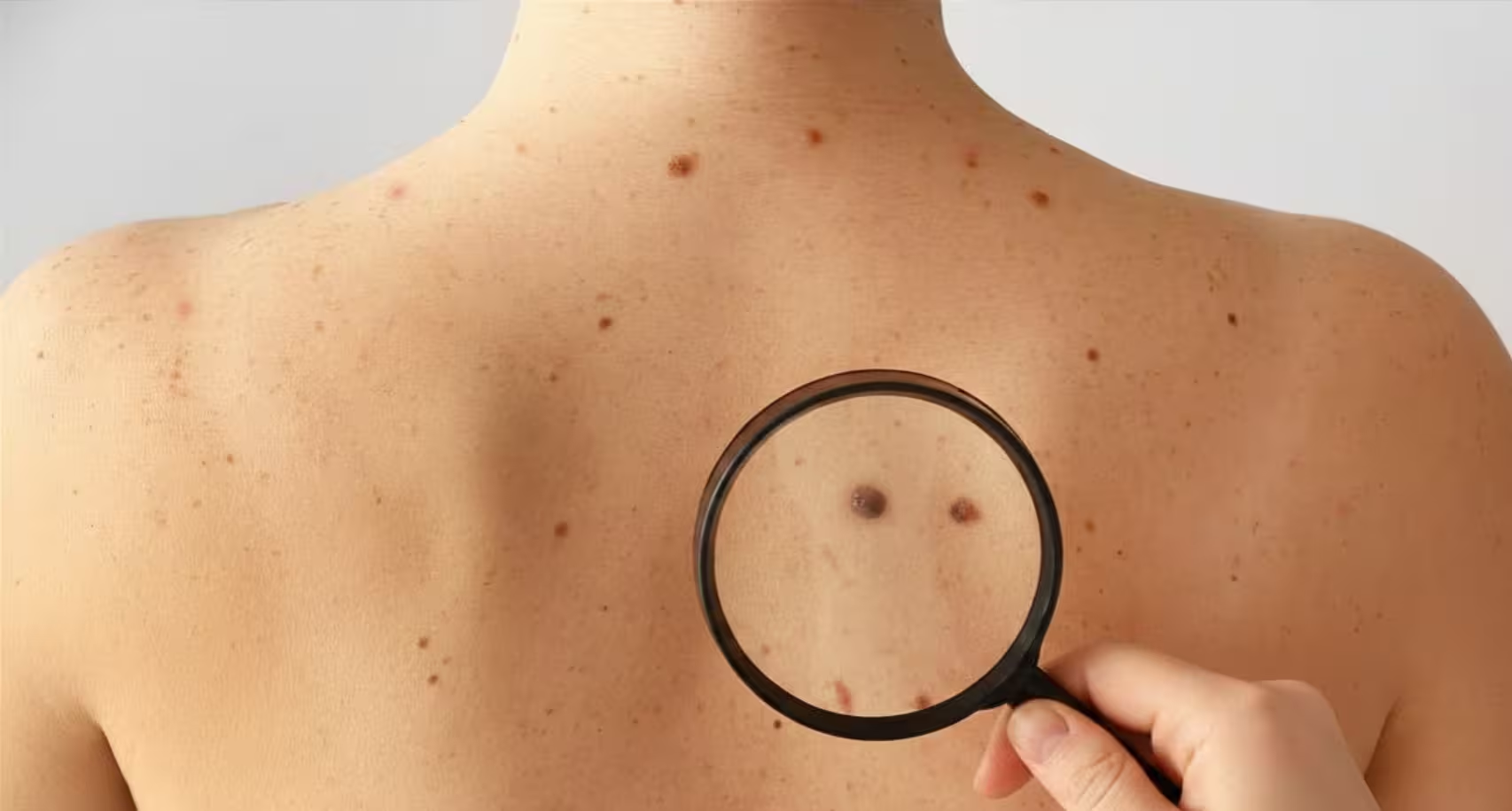
Summer often brings a welcome change in routine — more time outdoors, more sun exposure, and more attention to skin that's been covered up for much of the year. But it's also the season when people are most likely to notice new or changing marks on their skin.
At Chelmsford Private GPs, we often see patients who are unsure whether a mole, freckle, or patch of skin is something to be concerned about. In many cases, changes are harmless — but sometimes they can be an important early warning sign that shouldn't be ignored.
Increased sun exposure can make existing moles darker or more prominent, and tanning can highlight areas of pigmentation that weren't previously obvious. People are also more likely to see their skin in different lighting and angles during warmer months, especially on areas like the back, shoulders, and legs.
This makes summer a key time to stay aware of any changes — both new and existing.
Most skin spots are benign, but it's important to be aware of changes using the ABCDE guide:
Other signs to watch for include itching, bleeding, crusting, or a sore that doesn't heal.
It's important to remember that many skin changes are completely harmless, including sun-induced pigmentation, seborrhoeic keratoses, or simple changes in existing moles over time.
However, the key factor is change. Any spot that is new, evolving, or unusual for you is worth assessing properly rather than monitoring indefinitely at home.
You should consider booking an appointment if you notice:
Early assessment is always preferable, as it allows for reassurance or timely referral if needed.
At Chelmsford Private GPs, we offer prompt assessment of skin concerns as part of our GP services. We can examine lesions, provide clinical advice, and arrange appropriate onward referral if specialist review is required.
If you're unsure about a skin change, it's always better to get it checked.

You can contact us on any of the following:
Phoenix Hospital, Great Baddow, Chelmsford
Tel:
01245 203 838
Email:
[email protected]